

The Future of Range Rover Engine 3.0 in Hybrid and Electric Models
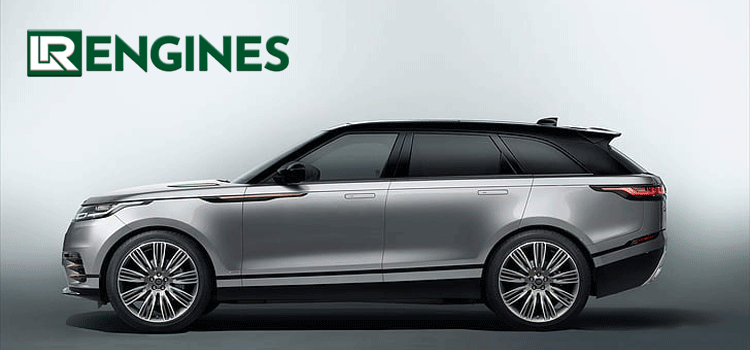
The automotive industry is entering a new era defined by electrification, sustainability, and advanced performance technologies. Among the brands leading this transition is Range Rover, known for its luxurious yet powerful SUVs. A significant focus has been placed on the Range Rover Engine 3.0, which has undergone several transformations to align with hybrid and electric mobility. This engine is not just a powerhouse—it is a bridge between traditional combustion systems and the future of electrified performance. With innovations in hybrid integration and growing discussions around eco-conscious motoring, the Range Rover Engine 3.0 plays a pivotal role. This article explores how the engine is evolving, its role in hybrid and electric vehicles, and why reconditioned engines remain a valuable option in this landscape.
Evolution of the Range Rover Engine 3.0 Over the Years
The Range Rover Engine 3.0 has evolved significantly since its introduction. Initially designed as a robust six-cylinder engine, it provided a balance of performance and durability suitable for both urban driving and rugged terrains. Over time, engineers enhanced its efficiency, integrating turbocharging and mild hybrid systems to reduce emissions without sacrificing power. These updates reflect how Range Rover has anticipated consumer demand for cleaner, more responsive vehicles. Even in its earlier iterations, the 3.0 engine stood out for smooth power delivery and towing capability. Now, with hybridization in focus, its evolution continues, making it a cornerstone of Range Rover’s sustainable future. For older models, reconditioned engines extend this legacy, keeping vehicles roadworthy while reducing environmental waste.
The Role of Mild Hybrid Technology in the Range Rover Engine 3.0
Mild hybrid technology has been one of the most impactful upgrades to the Range Rover Engine 3.0. Unlike full hybrids, mild hybrids use an integrated starter-generator and small battery pack to assist the combustion engine. This results in smoother acceleration, improved fuel efficiency, and reduced CO2 emissions. For drivers, this translates into performance that feels more refined without compromising Range Rover’s traditional power. The mild hybrid system also supports start-stop functions, minimizing fuel waste during idle times. Importantly, this step toward electrification shows how Range Rover can integrate sustainability with luxury. And for customers seeking affordability, reconditioned engines with mild hybrid components present a practical solution to enjoy advanced technology without the cost of a brand-new vehicle.
Plug-in Hybrid Applications and Performance Advantages
The next major leap for the Range Rover Engine 3.0 is its integration with plug-in hybrid systems. By pairing the combustion engine with a larger battery and electric motor, drivers can enjoy short all-electric journeys alongside long-range combustion capability. This dual system significantly reduces reliance on fossil fuels while maintaining the power Range Rover owners expect. The plug-in hybrid design allows urban commuters to drive emission-free within cities while offering extended range for long journeys. Furthermore, the smooth transition between electric and combustion modes ensures premium driving comfort. For many Range Rover enthusiasts, reconditioned engines with hybrid compatibility will remain an affordable yet sustainable way to embrace this technological shift.
Future Prospects of Full Electrification with Range Rover Models
While the Range Rover Engine 3.0 continues to adapt through hybrid technologies, the ultimate future lies in full electrification. Range Rover has already announced its plans to launch fully electric models, and the knowledge gained from hybridizing the 3.0 engine will inform this transition. Although the internal combustion element may eventually phase out, its design and engineering principles will inspire future electric drivetrains. This gradual shift ensures customers still experience the same luxurious performance they associate with Range Rover. Until then, hybrid 3.0 engines act as a crucial stepping stone. Additionally, as electrification expands, reconditioned engines will serve drivers who prefer traditional systems, creating a balance between innovation and familiarity.
Sustainability Benefits of the Range Rover Engine 3.0 Hybrids
The shift toward hybridization in the Range Rover Engine 3.0 is not only about performance—it’s also about sustainability. Hybrid models contribute to lower emissions, reduced fuel consumption, and decreased dependency on non-renewable resources. By enabling short journeys in electric-only mode, the 3.0 plug-in hybrid minimizes pollution in urban centers, aligning with global environmental goals. Furthermore, regenerative braking recycles energy back into the system, enhancing efficiency. Sustainability also extends to the aftermarket sector, where reconditioned engines prevent discarded parts from ending up as waste. In this way, both new and reconditioned 3.0 engines support environmentally responsible practices, making the Range Rover brand a leader in green luxury.
The Performance Edge: Balancing Power and Efficiency
One of the hallmarks of the Range Rover Engine 3.0 is its ability to balance raw power with modern efficiency. Even in hybridized forms, the engine retains its strong torque output and towing capacity, ensuring that Range Rover vehicles remain versatile. Advanced engineering ensures that the hybrid systems enhance rather than limit performance, offering smooth transitions between electric and combustion modes. Whether navigating city streets or tackling off-road conditions, the 3.0 hybrid engine delivers confidence and control. Drivers who choose reconditioned engines for older Range Rovers also benefit from this performance heritage, as reconditioning restores engines to near-original power and efficiency, often at a fraction of the replacement cost.
The Economic Benefits of Reconditioned Engines in the Hybrid Era
While the latest Range Rover Engine 3.0 hybrid models offer cutting-edge technology, not all drivers are ready or able to invest in brand-new vehicles. This is where reconditioned engines play a vital role. A reconditioned 3.0 engine provides affordability, sustainability, and reliability for those looking to extend the life of their current Range Rover. They undergo rigorous testing and refurbishment, ensuring they perform like new while significantly reducing costs. In the hybrid era, reconditioning also prevents waste, keeping valuable components in circulation rather than discarded. For consumers balancing performance, cost, and environmental responsibility, reconditioned 3.0 engines remain an attractive and practical choice.
The Long-Term Outlook for Range Rover Engine 3.0 in Electric Mobility
The Range Rover Engine 3.0 is not just an engine—it is a transitional technology that represents the brand’s path toward full electrification. In the long-term, hybrid versions will bridge the gap until electric-only models become mainstream. However, the principles that made the 3.0 engine so iconic—performance, durability, and refinement—will remain embedded in Range Rover’s identity. For customers, this means confidence that the spirit of the 3.0 engine will live on, even in electric formats. At the same time, the availability of reconditioned engines ensures ongoing support for older vehicles, extending their lifespan and reducing environmental waste. Together, these paths create a future where tradition and innovation coexist.
